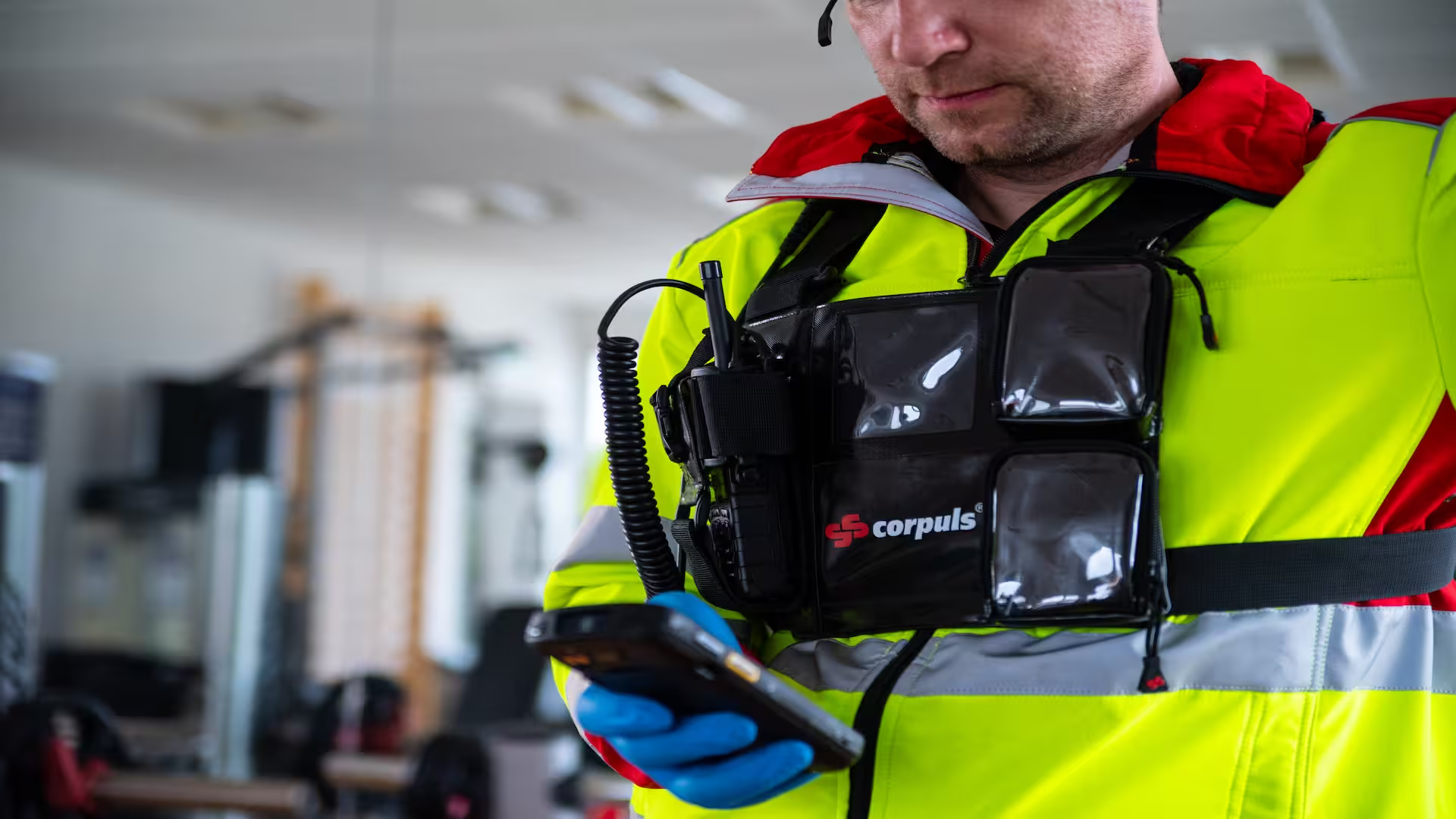
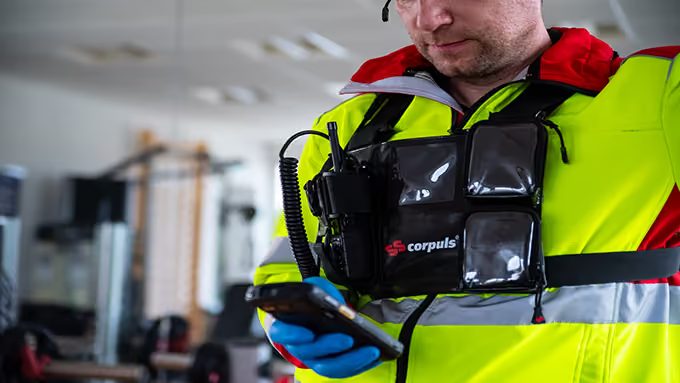
Every second counts in rescue operations. GS elektromedizinische Geräte GmbH - corpuls, a leading provider of emergency and intensive care products, is well aware of this. The Bavarian company has been developing innovative medical technology for over 40 years, which is used in rescue operations in particular.
This also includes the corpuls.mission platform, a comprehensive medical communication system that bundles medical data, chat, video and documentation - also known colloquially as "tele-emergency doctor".
Especially in rural or hard-to-reach areas, it is essential for this system to ensure continuous data transmission—both for video calls and for transmitting the patient’s vital signs. To ensure the reliable cellular connection required for this, the company relies on IoT SIM cards from WhereverSIM.
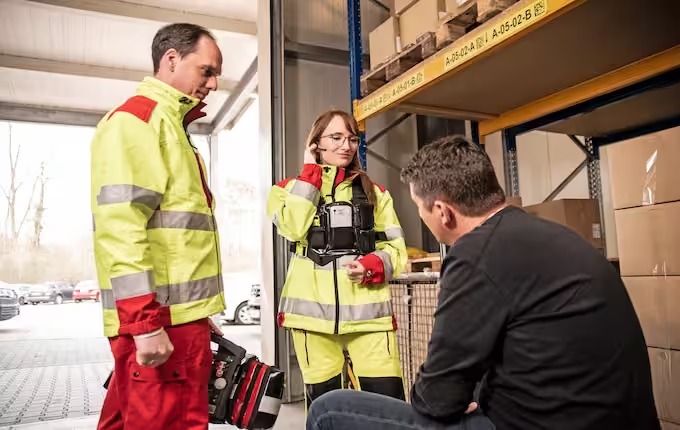
A typical operation in which the corpuls tele-emergency doctor system is used looks like this: An ambulance, equipped with the corpuls device, reaches the patient with breathing problems. There, an ECG is performed by the ambulance service to monitor cardiac activity.
The ECG data is not only processed locally on the corpuls3, but is also transferred to the cloud to provide additional, server-based values and diagrams. At the same time, an external emergency doctor, the so-called tele-emergency doctor, is called in via video conference and has direct access to the patient data and vital parameters. Together with a video call, he can assess the situation remotely and make a suspected diagnosis. ECG data and vital signs continue to be transmitted in real time during the journey so that the tele-EMS physician can react to any changes in the data.
The key point of this telemedicine solution is that, thanks to coordinated communication, staff are already informed about the patient's condition when they arrive at the hospital. Valuable minutes are saved as treatment can be provided immediately. What's more, continuous data transmission means that the operational data can also be evaluated retrospectively and used to optimize processes.
Emergency response operations take place everywhere—in cities, in rural areas, and on the highway. No matter where an operation takes place, corpuls devices must be able to rely on a flawless internet connection. “The connection must never be interrupted,” says Philipp Ehmeier, Team Leader of Digital Product Management. “That’s why we chose WhereverSIM as our IoT SIM provider back then. The ability to access all available networks without restrictions is absolutely essential for our use case.” non-steered roaming makes exactly that possible: The IoT SIM, also known as an M2M SIM card, does not prioritize a specific mobile network operator but instead allows the end device to connect to the strongest local mobile network.
Not only is reliable network coverage essential for real-time data transmission, but high network quality is also crucial for the remote diagnosis provided by the connected tele-emergency physician. After all, the physician must be able to clearly understand the patient and the paramedics and assess the situation. That was precisely the deciding factor in switching from a major mobile network operator to WhereverSIM. “Network operators generally always prioritize their own network first. But when our vehicles and devices are on the move, we have to be able to rely on our product to work even if a specific mobile network goes down or signal strength fluctuates.” Previously, the company had not had good experiences with managed roaming, according to Ehmeier. “The moment when network deprioritization kicked in was simply too late—often when coverage was already extremely poor and no more data could be transmitted.”
Another significant advantage for the company is that WhereverSIM’s IoT SIM cards allow access to neighboring countries’ cellular networks when operating near the border. This reduced the risk of device failure for corpuls gen 0.

Another important consideration when choosing an IoT SIM provider was security. When transmitting private patient data, it is essential to ensure that it is transmitted securely and encrypted. For this reason, corpuls uses a private APN to protect itself against unauthorized access to sensitive data.
In addition to the advantage that charges for WhereverSIM’s M2M SIM cards don’t apply until the moment of activation, Thomas Martin, Product Manager for Digital Products, highlights a crucial point:
"Often, we cannot fully estimate how much data volume we will need in advance of an operation. This depends on the duration of the operation, the duration of video communication, and the duration of audio and data transmission. Of course, we make a rough calculation in advance, but we have no control over whether our devices will be used 10 or 30 times a day."
In extreme cases, data throttling could cost corpuls its business. “We simply can’t afford a data limit,” says Martin. For such use cases, WhereverSIM offers flexible data plans and dynamic pricing. One example is data pooling: a pool of active M2M SIM cards that share a common data allowance, so that the lower data usage of one SIM can be offset by the higher usage of another.
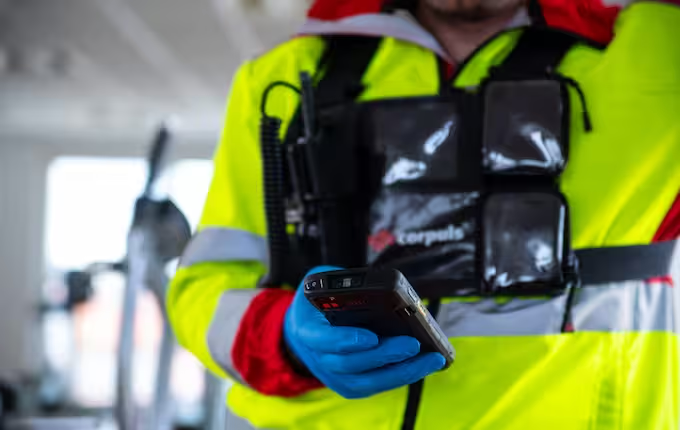
corpuls already has over 2,000 WhereverSIM M2M SIM cards in use—and that number is growing. Still, Thomas Martin can’t remember the last time he contacted WhereverSIM’s support team. “I know we’ve already worked together on solutions, but so far everything has always gone so smoothly that we haven’t needed to rely on support. I simply manage the SIM cards via the dashboard and can count on everything working as it should.”