A multi-network SIM—also known as a multi-operator SIM, M2M SIM, or roaming SIM—enables roaming within a country and thus allows connection to various cellular networks. This ensures a seamless and reliable connection for IoT devices.
Simply put: A roaming SIM or multi-network SIM can use the networks of different providers thanks to various roaming agreements.
While a consumer SIM—like the one you use in your own smartphone—is typically limited to its home network in your home country and only roams abroad, an IoT SIM roams in every country. For example, in Germany, it can use the cellular networks of Vodafone, Telekom, or O2. Nationwide coverage in Germany via a single mobile network is usually insufficient for professional networking.
Why is this important? IoT devices have specific connectivity requirements. Some devices must not lose their connection—for example, when the SIM is used in an ambulance. Transmission and communication problems would be catastrophic in such cases. Therefore, access to multiple networks is necessary to ensure a connection is always available.

RTK tractor steering systems require real-time GPS data accurate to the centimeter. If the connection is lost in the field, work comes to a halt. A multi-network SIM card ensures accurate guidance even in extremely remote areas.
Trucks and containers pass through countless dead zones and cross national borders every day. Only by being able to switch networks automatically can supply chains be monitored seamlessly.
Whether it's emergency call systems in elevators, smart barrier systems, or medical devices like those in ambulances: human lives and critical operations depend on a stable connection that must never be interrupted.
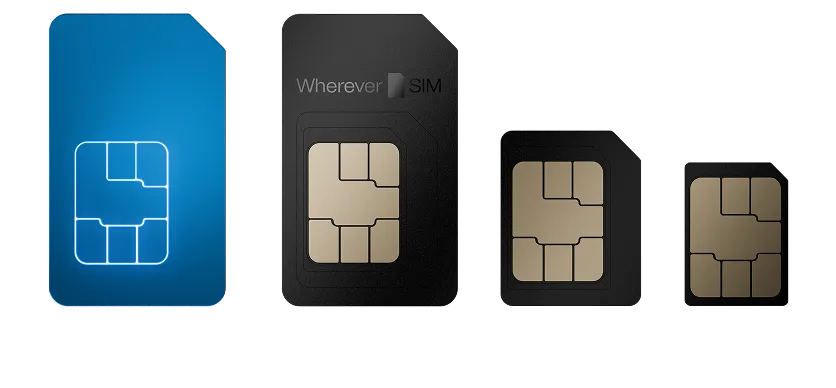
In order to meet the many different requirements and conditions of end devices and machines, IoT SIM cards are available in various formats. In addition to the classic IoT SIM formats mini, micro and nano, there are embedded SIMs that can be soldered on directly as a chip.
In addition to the standard version of the various formats, there is also an "Industrial SIM". This more robust variant is designed for an extended temperature range and a longer service life, for example.
-25°C to +85°C
500.000
10 years
-40°C to +105°C
1.000.000
10 years at -40°C to +105°C
15 years at -25°C to +85°C
2FF, 3FF, 4FF
2FF, 3FF, MFF2
To minimize the risk of connection drops in IoT and M2M projects, multi-operator SIM cards can also access the networks of different mobile carriers within the country (in Germany, Telekom, Vodafone, and O2) vianational roaming. M2M SIM cards are therefore also referred to as multi-network SIMs or roaming SIMs.
However, there are also differences in network access for IoT SIM cards: SIMs from independent companies, such as WhereverSIM, do not favor any particular mobile network (non-steered roaming), thereby allowing the device to connect to the best available network at its location. In this context, the terms “network independence” or “unsteered roaming” are also used.
M2M SIMs from major network operators generally prioritize their own mobile network (steered roaming). This means that before a device is allowed to connect to another mobile network operator’s network, its own network must no longer be available. Until then, the device—no matter how poor the reception may be—always remains on the network of the original operator.
Especially for projects where a strong and reliable connection is essential at all times, this prioritization of networks can be a disadvantage.
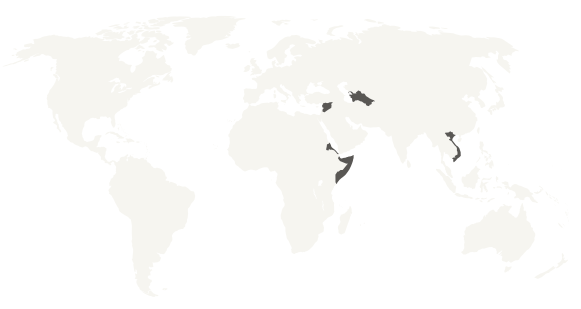
Security is essential for M2M communication. That is why mobile network providers already separate M2M connections from the rest of the data traffic within their core networks. This is made possible by what are known as APNs. These are private access points to the network. This APN must be entered once for the SIM card so that it can establish a connection to the network.
If additional protection is required for data traffic between the end device and the system, VPNs can also be used.