Most providers can roll out a large number of SIMs. Our expertise lies in managing a large number of SIMs efficiently, securely, and in a structured manner.
From reliable connectivity to powerful SIM management: WhereverSIM provides the technical infrastructure that enables you to efficiently manage and reliably operate even large SIM fleets.

Over 1,500 companies worldwide rely on WhereverSIM


As the IoT infrastructure grows, so do the demands:
WhereverSIM provides the technical foundation for successful IoT projects, with a SIM card for global connectivity and an intuitive SIM management portal.
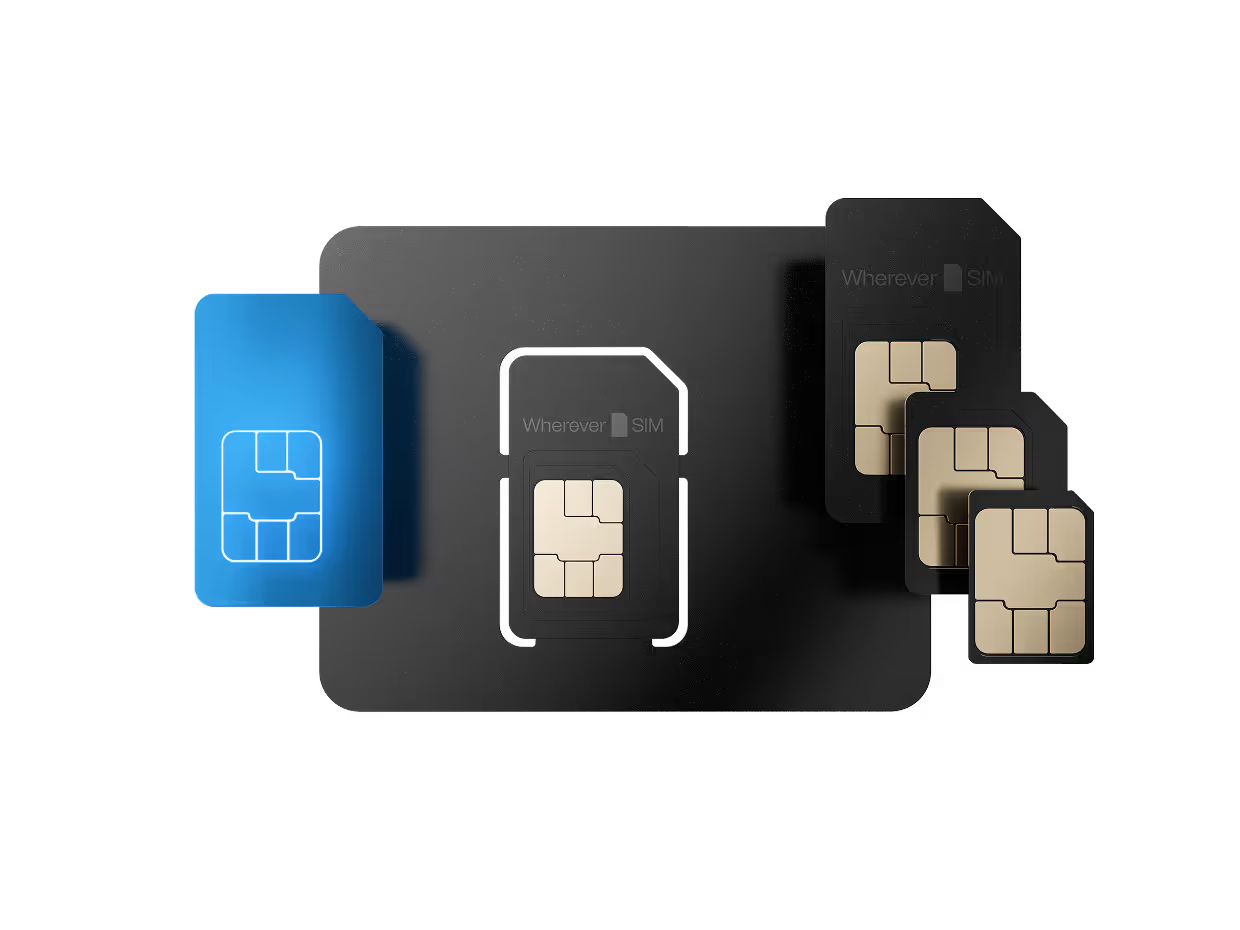
International IoT projects present unique challenges. That is why we have consistently tailored our SIM and our management portal to meet the needs of large enterprises.
Manage your entire SIM fleet centrally through our powerful online portal—regardless of country, mobile network, or the number of devices you have.
Activate, pause, or monitor SIM cards in real time and keep track of status, usage, and costs at all times. This reduces administrative overhead and provides transparency across your entire IoT infrastructure.
International corporate groups, different business units, and customer projects all place different demands on SIM card management.
Our multi-tenant capability allows organizational units to be clearly separated from one another while still being managed centrally.
Customizable roles and permissions ensure that each user can access only the data and functions that are relevant to them.
With dynamic data pooling, detailed usage reports, and transparent rates, you can keep track of all your mobile costs at all times.
With data pooling, your data allowance is flexibly distributed across your entire SIM fleet and used optimally. At the same time, comprehensive reports and real-time information enable you to exercise effective cost control, even with thousands of active SIM cards.
Using our REST API, you can seamlessly integrate all information from the management portal into existing ERP, CRM, or IoT platforms.
Activations, plan changes, status queries, and notifications can be automated and integrated directly into your existing workflows. This saves time, reduces errors, and ensures efficient processes.
Protect your devices and data with security features designed specifically for professional IoT projects.
Private APNs, VPN connections, IMEI lock, and other features help prevent unauthorized access and ensure the secure transmission of sensitive data. This lays the foundation for secure and reliable IoT communication—even in demanding enterprise environments.

Access to multiple mobile networks within a country (national roaming), e.g., in Germany: Telekom, Vodafone, and o2.

Thanks to network roaming, you always have access to the strongest mobile network in your location by default, regardless of the carrier.

>485 networks in over 189 countries for your M2M project. Near borders, devices automatically connect to networks in neighboring countries.

No throttling. The fastest possible local speed at all times.

As standard, our M2M SIM cards support data transmissions and SMS, voice calls on request.

International IoT projects are constantly evolving, and increasing demands are part of everyday life for large companies.
That’s why, in addition to high-performance connectivity, we support our customers with technical consulting, personalized project support, and a platform that grows with their needs.

We'll discuss the project, the use case, and what it takes to make the project a success.
Request today, delivered in two days. We typically ship the trial SIM cards no later than the next business day.
The test SIM is already activated when it's shipped to you. Just insert it, enable roaming on your device, and you'll be connected to the best network right away.