Wireless M2M Communication
Wireless means that something is used without the use of a cable. Well-known examples are remote controls and home Wi-Fi.
This term is also frequently used in the context of M2M communication. Depending on the application, the machines or devices that communicate with each other - i.e. exchange data - are located in more or less accessible locations. Accordingly, it can be complicated and very expensive to lay and use cables for data transmission. For this reason, wireless transmission options are being sought.
Mobile radio for wireless data transmission for M2M applications
One way to transmit data wirelessly from IoT and M2M devices is via cellular networks. The advantage is that this technology is well-established, standardized, and the infrastructure is available almost everywhere—not only in Germany, but all over the world. This widespread availability is particularly relevant for applications or devices that are constantly on the move.
However, not all cellular networks are created equal. A survey by the Federal Network Agency has shown that in approximately 7.2 percent of Germany’s total land area, only one of the major network operators’ 4G networks is available. Consequently, the risk of connection interruptions and outages increases in these areas. If, for example, sensitive health data needs to be transmitted quickly, this becomes dangerous.
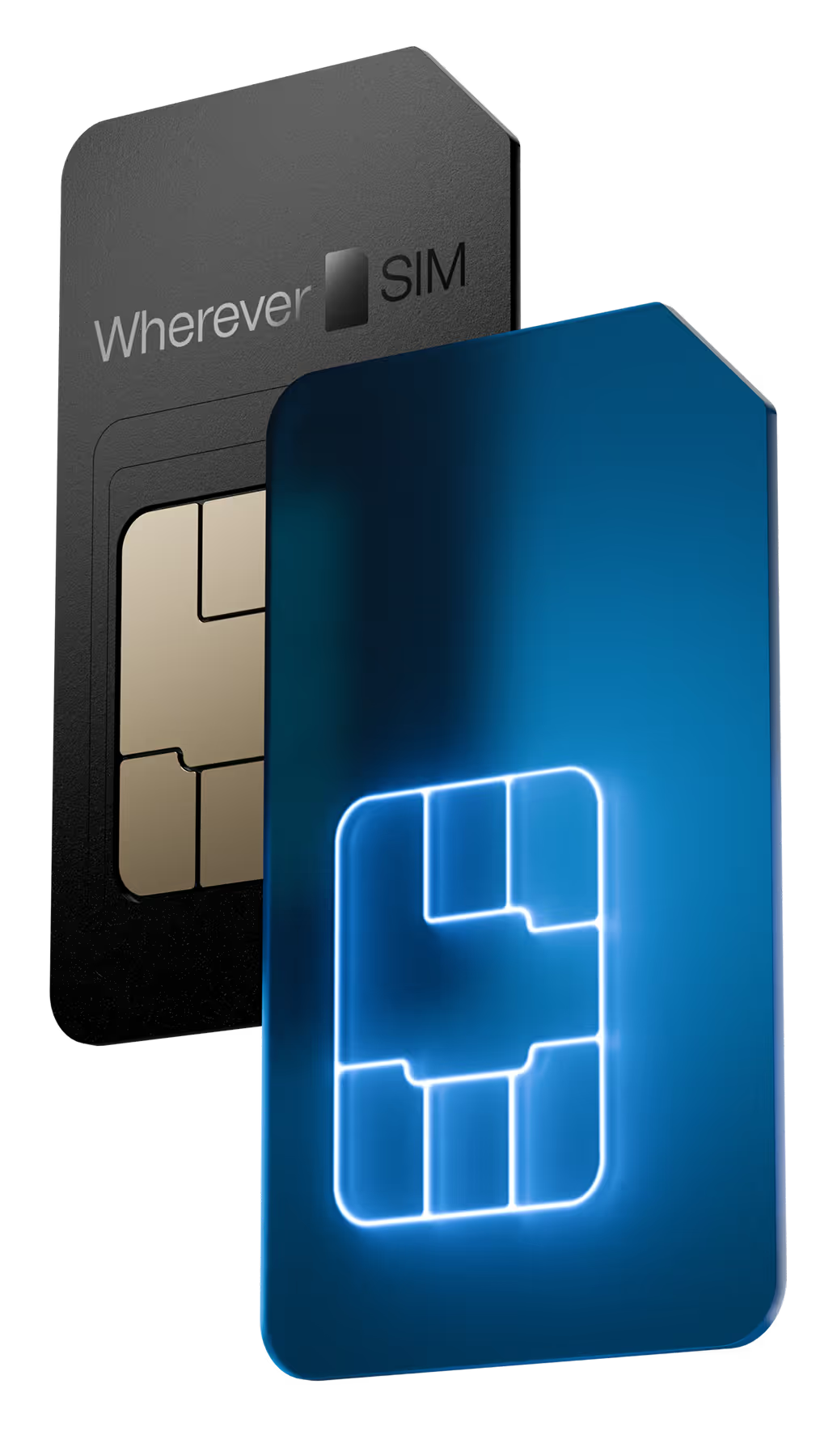
The Federal Network Agency’s study underscores the importance of M2M SIM cards for IoT and M2M projects. This is because these SIM cards can access not just one network, but the mobile networks of various operators. You can obtain suitable SIM cards for wireless and wireless communication between machines from wherever SIM. Our M2M SIM cards also enable IoT devices to connect to the strongest network at a given location, regardless of a specific network provider. Thus, it is not the network operator that matters, but solely the available signal strength.