Anyone familiar with wireless communication knows the benefits of cellular technology for IoT projects. The only thing missing is the right M2M SIM card to ensure that data is transmitted quickly and securely from IoT devices. We’ll explain how to find the best M2M SIM provider and where the pitfalls for your project lie.
Anyone comparing M2M SIM providers will quickly realize that the offerings differ not only in price but also in network coverage, technology, rate plans, and contract terms.
The best IoT SIM card? Unfortunately, there’s no simple, one-size-fits-all answer to that question. Every IoT project is different. When comparing IoT SIM cards, companies should consider various criteria, including—in particular—network coverage, roaming behavior (key distinction: controlled vs. uncontrolled), supported cellular standards, specific rate plans, and the general terms and conditions of the contract.
What matters most isn’t necessarily the lowest price per SIM card, but which overall package best suits the planned use case.
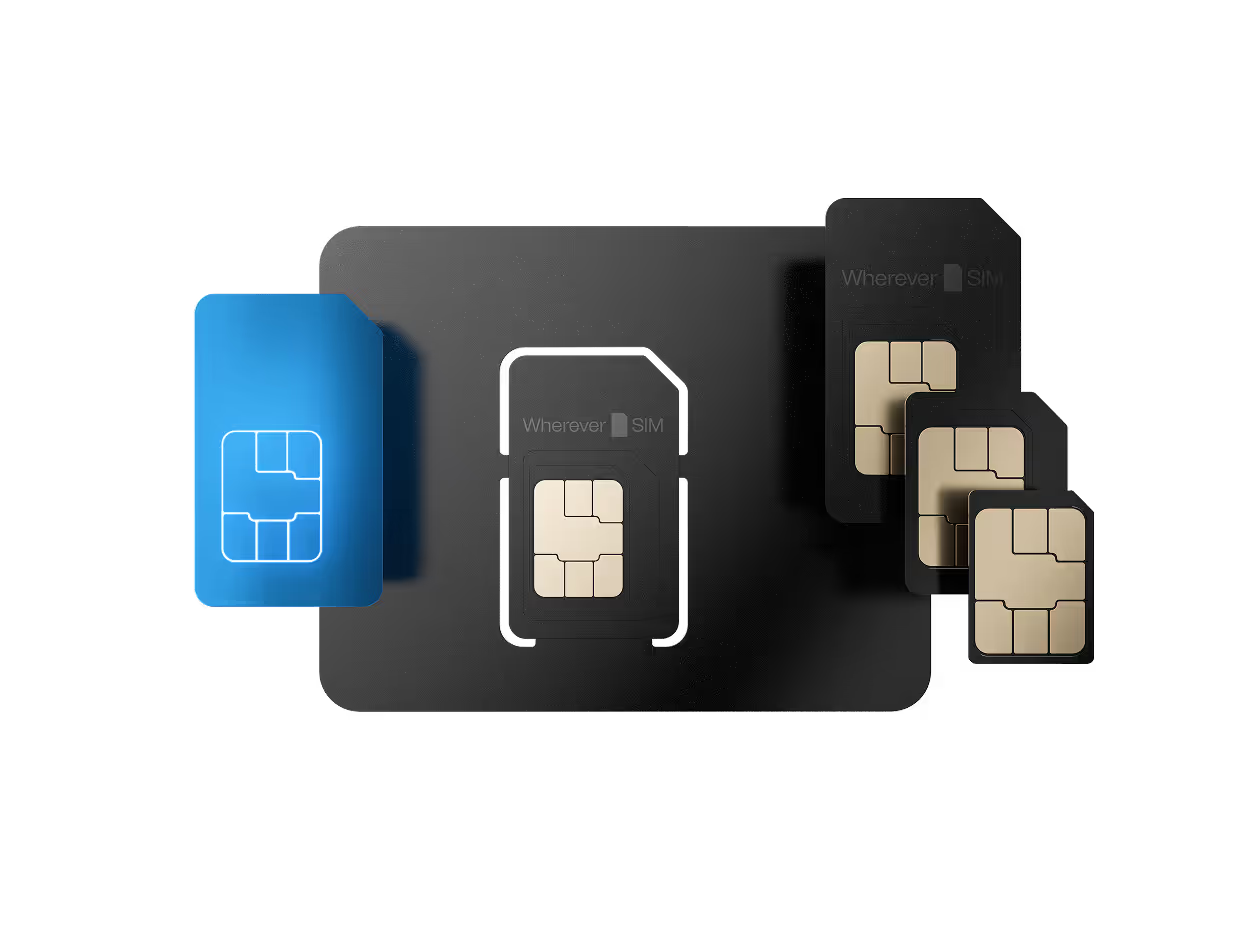
Whether you need just 15 SIM cards for M2M communication to start with or as many as 50,000 SIM cards, a good M2M SIM provider should meet the technical and economic requirements of your IoT project. The following factors are particularly important:
In which country will the IoT project be launched? Do the devices there simply need access to a single cellular network, or do they require multiple networks? Are the deployment sites located in border regions, meaning that networks in neighboring countries are also relevant? And where might your devices be deployed in the future?
These are all questions you should consider when selecting an M2M SIM provider. After all, it’s not just the number of supported countries that matters, but also which and how many cellular networks are available in each location. If possible, also factor in planned expansions and future deployment locations. This ensures that the provider’s network coverage aligns not only with the current rollout but also with the long-term development of your IoT project.
What to look for when comparing providers: the number of available networks per country, coverage at the actual deployment locations, and network availability in potential future target markets.
The mere availability of multiple cellular networks does not guarantee a reliable connection. How the device is allowed to switch between these networks is also crucial. Therefore, check whether a provider uses steered or non-steered roaming.
With steered roaming, certain cellular networks are given priority. The SIM instructs the device to connect to these networks first—even if other mobile networks at that location would offer a better connection. With non-steered roaming, on the other hand, the SIM provider does not prioritize any specific network, as is the case with WhereverSIM: By default, the devices decide which mobile network to connect to based solely on signal strength.
This flexibility can be an important selection criterion, especially for IoT applications that are used in varying locations or that rely on high availability. Therefore, when comparing M2M SIM providers, don’t just ask, “Which networks can my device use?” but also, “How can it use these networks?”
Which cellular standards do the devices support or require? Is this standard available in the countries where they will be deployed? And how long are the devices expected to remain in service? Depending on the IoT application, various cellular standards—ranging from 2G to 5G—or LPWAN technologies such as LTE-M and NB-IoT may be relevant. Therefore, check which technologies the provider supports and whether they are available in the required networks and countries.
Here, too, the same principle applies: Think about tomorrow today. Don’t just consider the current rollout—think about the planned lifespan of your devices. Networks and mobile communication standards are changing: For example, 2G and 3G are being phased out in many countries. Especially for IoT devices that are intended to remain in use for many years, the connectivity strategy should therefore be planned with as long a time horizon as possible.
How much data do your devices use? Is usage consistent, or does it fluctuate from month to month? Are there seasonal variations, or are there devices that don’t transmit any data at all at times? The answers to these questions will help you find not only the right M2M plan but also the best IoT SIM provider for your project.
Depending on the project, different pricing plans may make sense, which is why we at WhereverSIM offer a variety of M2M plans. For example, if data usage is predictable, a fixed data package per SIM card may be the right choice. If usage fluctuates more significantly, pay-as-you-go models or shared data pools offer greater flexibility. For seasonal applications, one factor that’s often overlooked is whether unused SIM cards can be paused without incurring the full base fee or a fee for pausing and reactivation.
When comparing plans, therefore, pay attention to how well the plans align with—or can be adapted to—the usage patterns and changes in your IoT project. Especially as the number of devices grows or their data usage becomes apparent only during operation, rigid pricing models can lead to unnecessary costs in the long run.
Will the M2M SIM work with my hardware? How good is network coverage at the actual deployment sites? And does the management platform offer all the features I’ll need during later operations? Many of these questions can only be answered to a limited extent on paper. Therefore, make sure to check whether an M2M SIM provider offers the option to thoroughly test SIM cards and the platform before the actual rollout. Conduct the test phase under realistic conditions whenever possible: using the intended hardware, at typical deployment locations, and with the data volumes expected during actual operation. This way, you can not only verify connectivity and compatibility but also gain a better sense of data consumption, usability, and administrative overhead.
Especially before larger or long-term IoT deployments, a test phase can help identify technical or financial pitfalls early on, before many devices are rolled out and a subsequent switch to a different provider becomes correspondingly time-consuming (and expensive).
What kind of data do my devices transmit? What specific security requirements do I need to ensure that no one gains unauthorized access from the public Internet? Do I need a private APN or an encrypted connection to my own infrastructure? Security requirements vary significantly depending on the IoT project and should therefore be taken into account when selecting an M2M SIM provider. So make sure that all the necessary features are offered before you commit to the wrong M2M SIM provider for the long term. WhereverSIM offers private APNs, VPN connections, IPsec, and private static IP addresses—but not every IoT SIM provider supports these features.
In addition to the actual data usage, there may be additional costs depending on the M2M SIM provider. Be sure to check the terms and conditions carefully to see exactly what these are. Are there monthly base fees, minimum contract terms, or minimum purchase requirements? And are there additional costs for activating, pausing, or reactivating SIM cards? A low price per SIM or megabyte doesn’t tell you much about how cost-effective an M2M SIM provider actually is for your project.
When comparing M2M SIM providers, you shouldn’t base your decision solely on individual plan prices; instead, consider the costs over the entire lifecycle of your SIM cards. Especially with large device fleets or a phased rollout, seemingly small additional costs can make a significant difference.
Who can I contact if technical questions arise during setup or ongoing operation? Is there a dedicated point of contact? Will I get the support I need if the worst happens? With IoT projects, the partnership with an M2M SIM provider doesn’t end with the delivery of the SIM cards. There are always moments when availability, fast response times, and technical expertise become crucial. When comparing providers, therefore, don’t just consider technical features and prices—also consider what kind of support you can expect after the rollout. The difference that good technical support can make becomes apparent no later than the first connection problem.
In a nutshell: The best M2M SIM provider is the one whose offering meets the requirements of your IoT project—both today and in the long term.
That’s why you should define your requirements as early as possible and as specifically as possible, and test the SIM card and platform under realistic conditions before choosing a provider.
Especially for long-term IoT projects, it’s worth thinking ahead to the later rollout: Can the chosen solution grow with your project, cover additional countries, and also meet future requirements? This will help ensure that an M2M SIM that’s suitable today doesn’t later become a limiting factor for your IoT project.